Fishing Reports
Take a look at our most recent fly fishing report for the Taos area. If you have any questions about current fishing conditions, hatches or what waters are fishing best, don't hesitate to give us a call—we're always happy to help.
9-23-2026
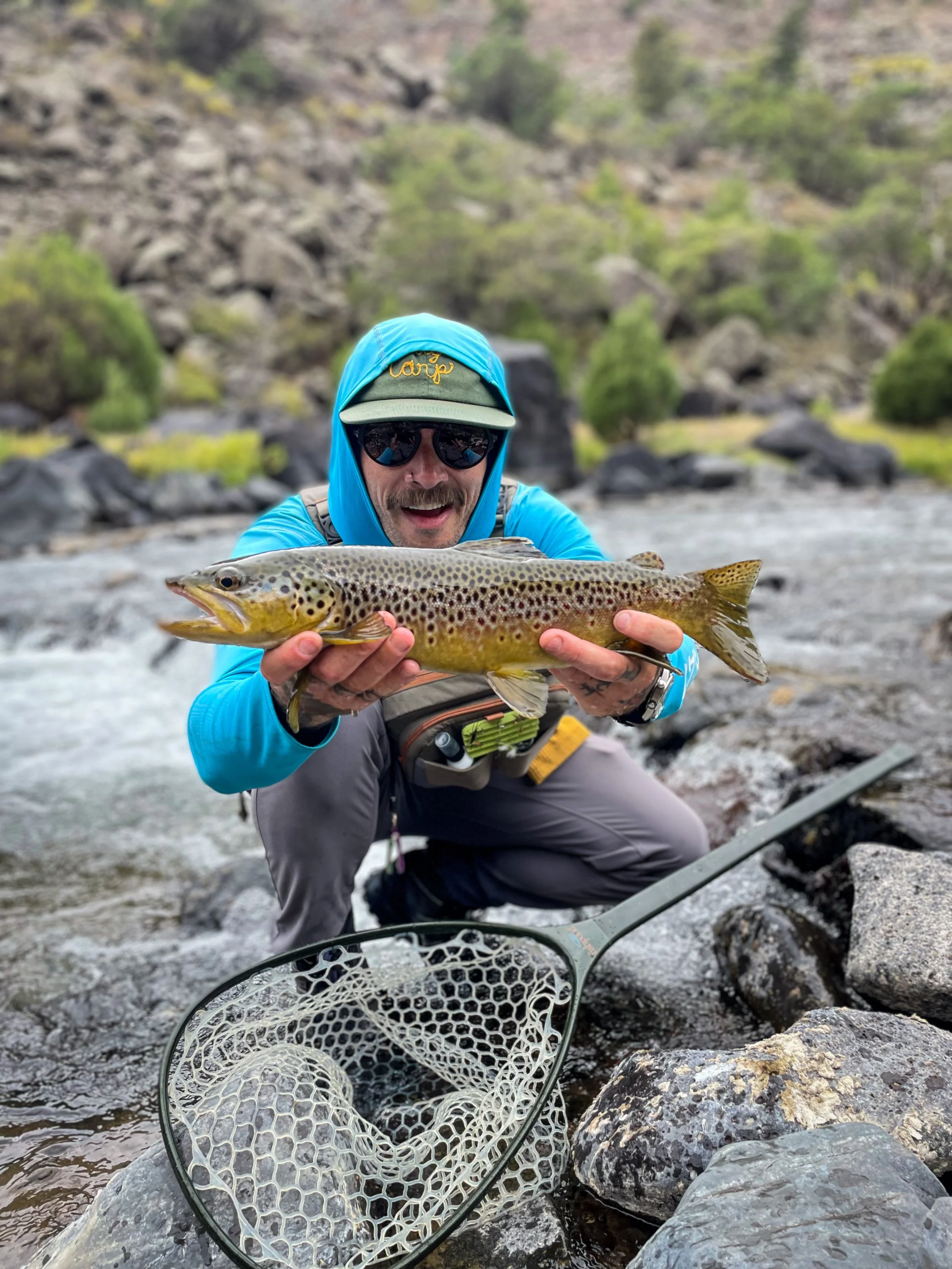
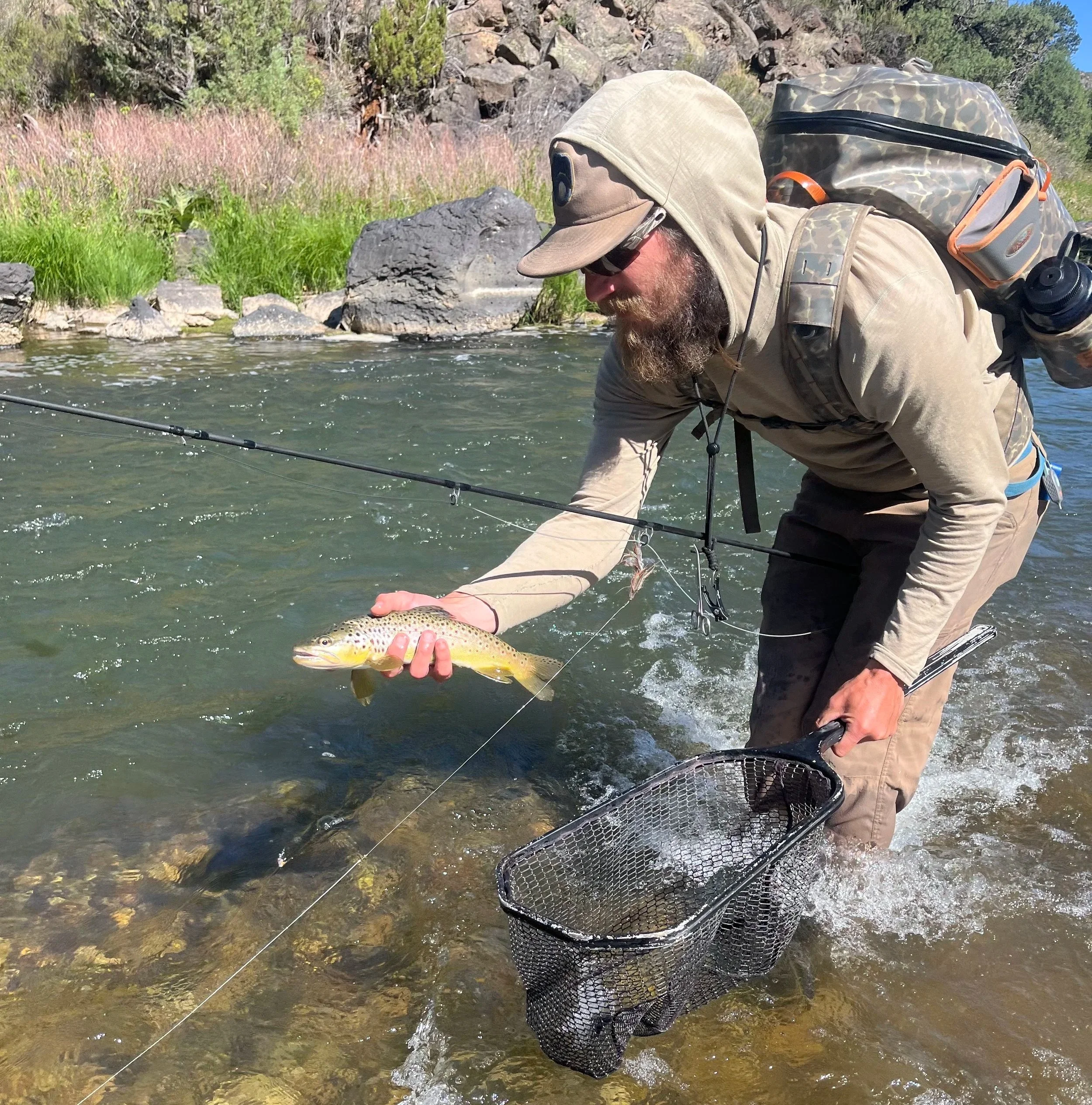
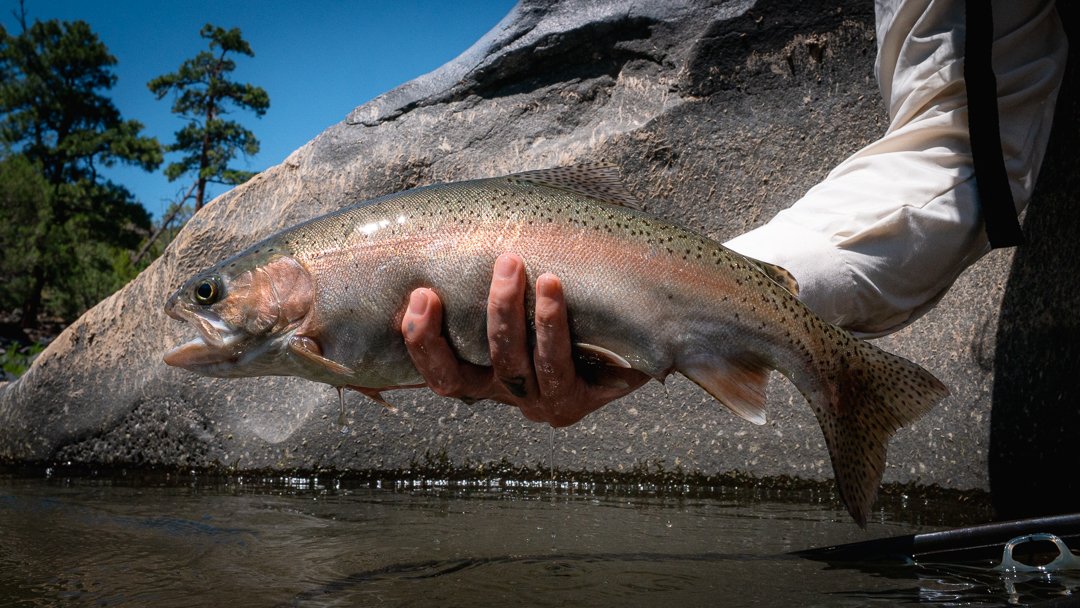
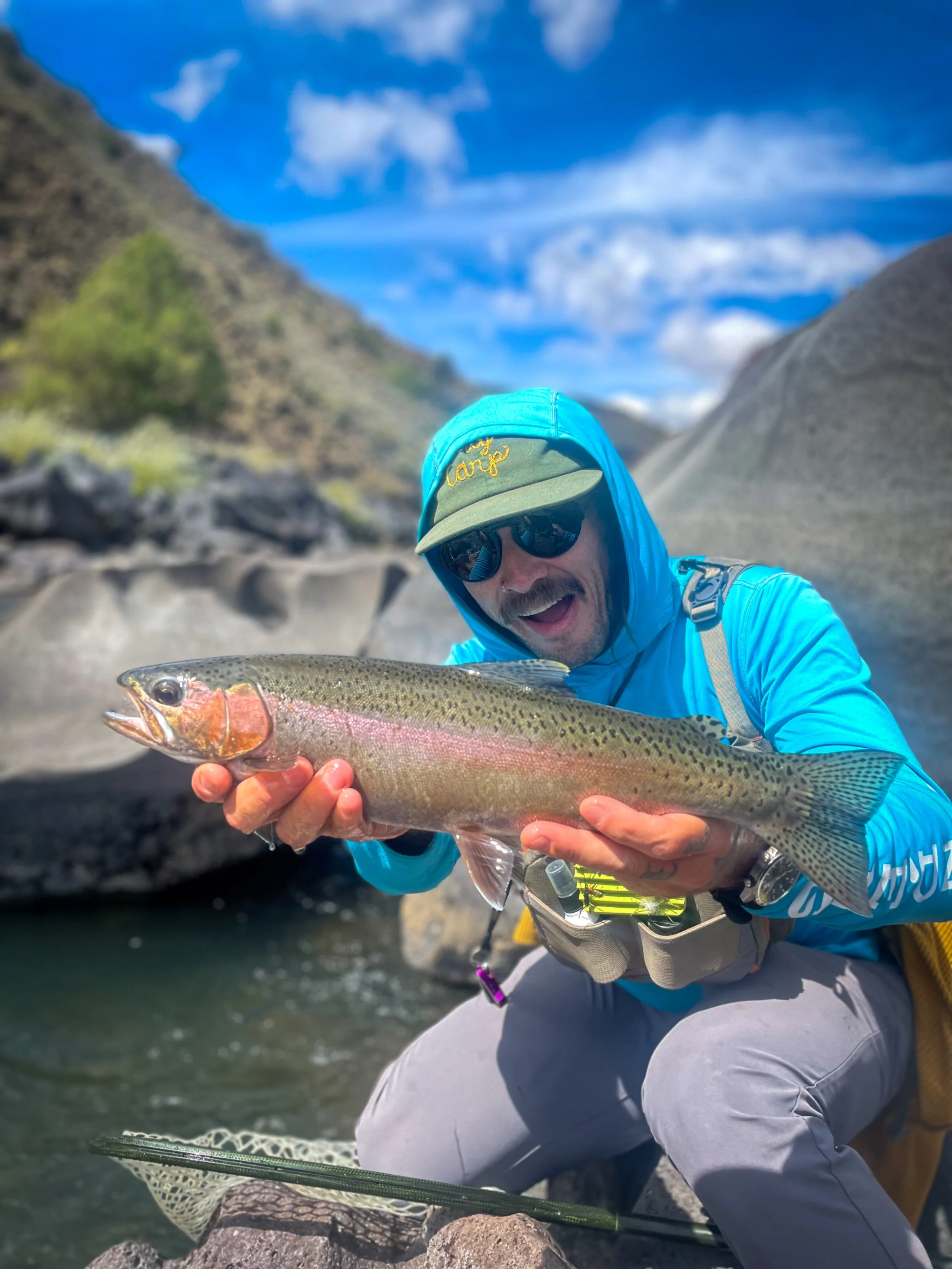
It’s officially fall on the Rio Grande, and the fishing couldn’t be better. We’ve gotten plenty of rain lately, water temperatures have started to drop, and the fish are getting very active. The brown trout are starting to get fired up for the spawn, while the rainbows are bulking up for winter. Most of the Rio Grande has been fishing excellent, and we’ve been having luck with just about every method—dries, emergers, nymphs, and streamers. Most days, we’re even getting into all of them in a single day.
Take advantage of the cloudier days by throwing streamers, whether you prefer a smaller leech pattern or one of your bigger Kelly Galloup-style streamers. When throwing streamers, covering lots of water is going to be your best bet. We’ve been finding fish in the slowest pools and the fastest whitewater, so don’t be afraid to work different types of water. Adjusting your weight to match the speed and depth of the water is going to be key. I’m a fan of incorporating weight into my flies with tungsten beads, but don’t hesitate to add some split shot when needed.
On warmer days, we’re still seeing plenty of hopper activity up top, along with tricos and caddis. Even when you don’t see fish rising, they won’t necessarily pass up a tasty meal when it’s drifted right in front of them. As far as nymphs go, we’re sticking with the usual suspects: pheasant tails, hot spot nymphs, perdigons, hare’s ears, sexy waltzes, and thread Frenchies. Don’t hesitate to drift a leech down low either.
The Rio Chama below El Vado and the Red River have been fishing very well too, but this time of year it’s hard to beat the Rio Grande. I always tell people, if I ever left Taos, which I won’t, and could only come back once a year, it’d be in the fall to fish the Rio Grande. It truly is one of the best times of year around here.
Past Fishing Reports
-
Fishing in the Taos area continues to be excellent. We have been fishing everything from high-country streams to smallmouth bass on the lower Rio Grande.
It is very important to monitor water temperatures and stop fishing for trout when temperatures reach 66 degrees. This helps protect the trout, as their stress levels increase significantly during periods of warm water. Further upstream on the Rio Grande, including the Middle Box and Wild Rivers areas, trout fishing can remain productive throughout the day because of the cold water supplied by our springs. However, that will not last all summer, so be sure to keep a close eye on water temperatures as air temperatures continue to climb.
This is the perfect time of year to explore our high-mountain streams, where water temperatures stay cool. A single dry fly, such as a caddis, mayfly, or small hopper, can be very effective. Adding a small dropper in the deeper holes will often entice trout that are not willing to rise to the surface.
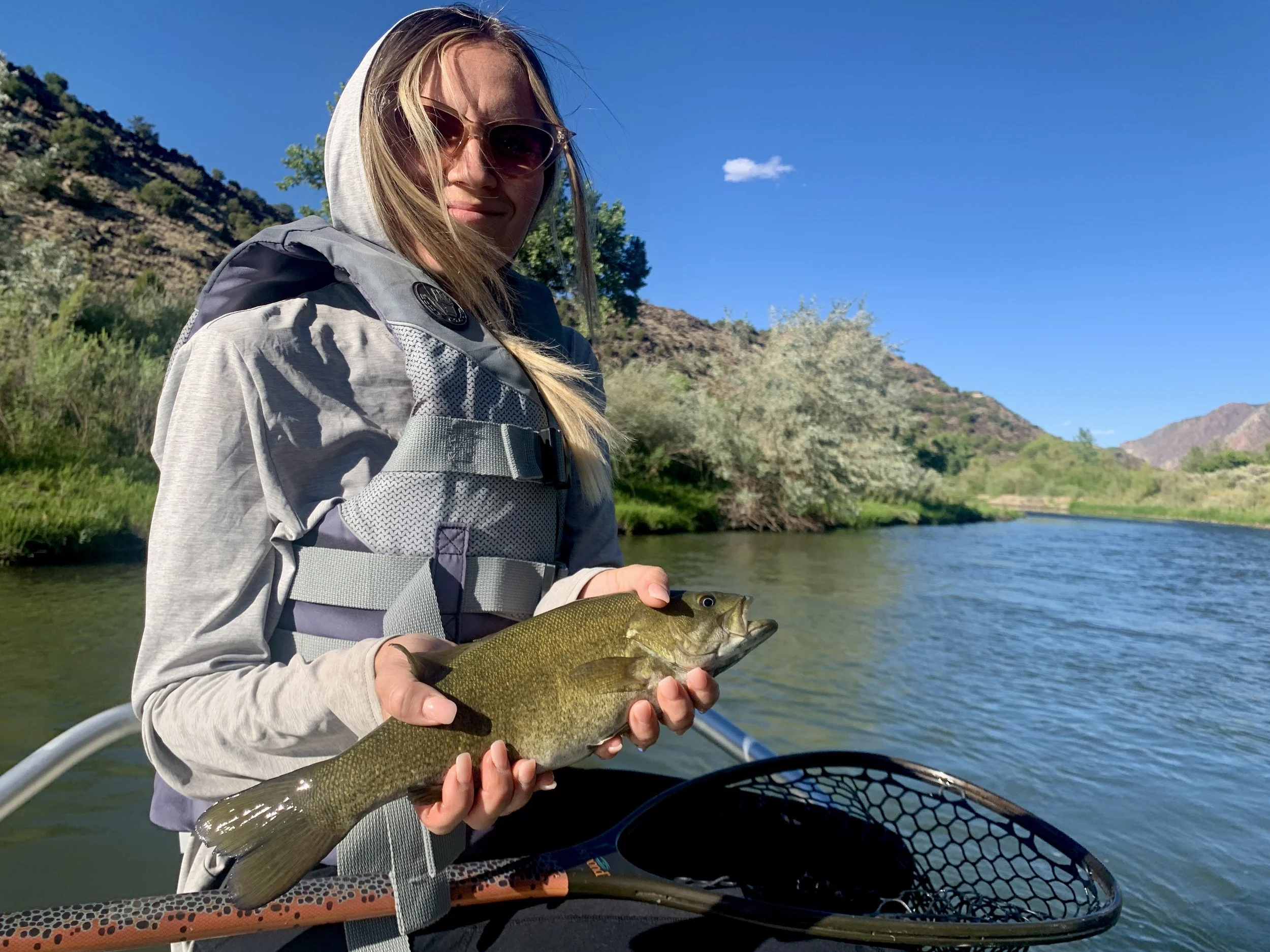
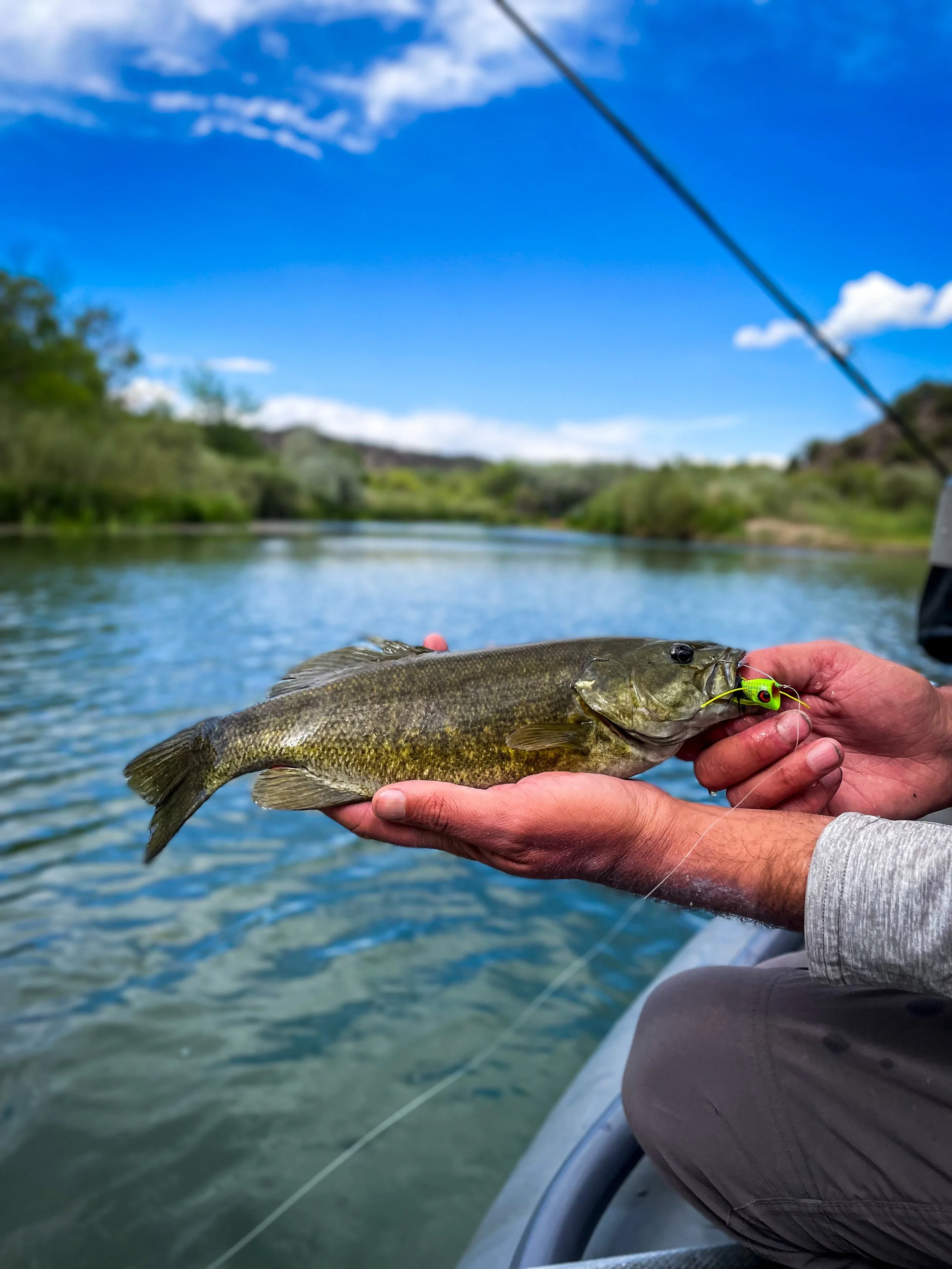
Smallmouth bass fishing on the lower Rio Grande has really picked up and continues to provide a lot of excitement. It's hard to beat the aggressive strikes these fish offer, and we are catching many bass on the surface using poppers and hoppers.
-
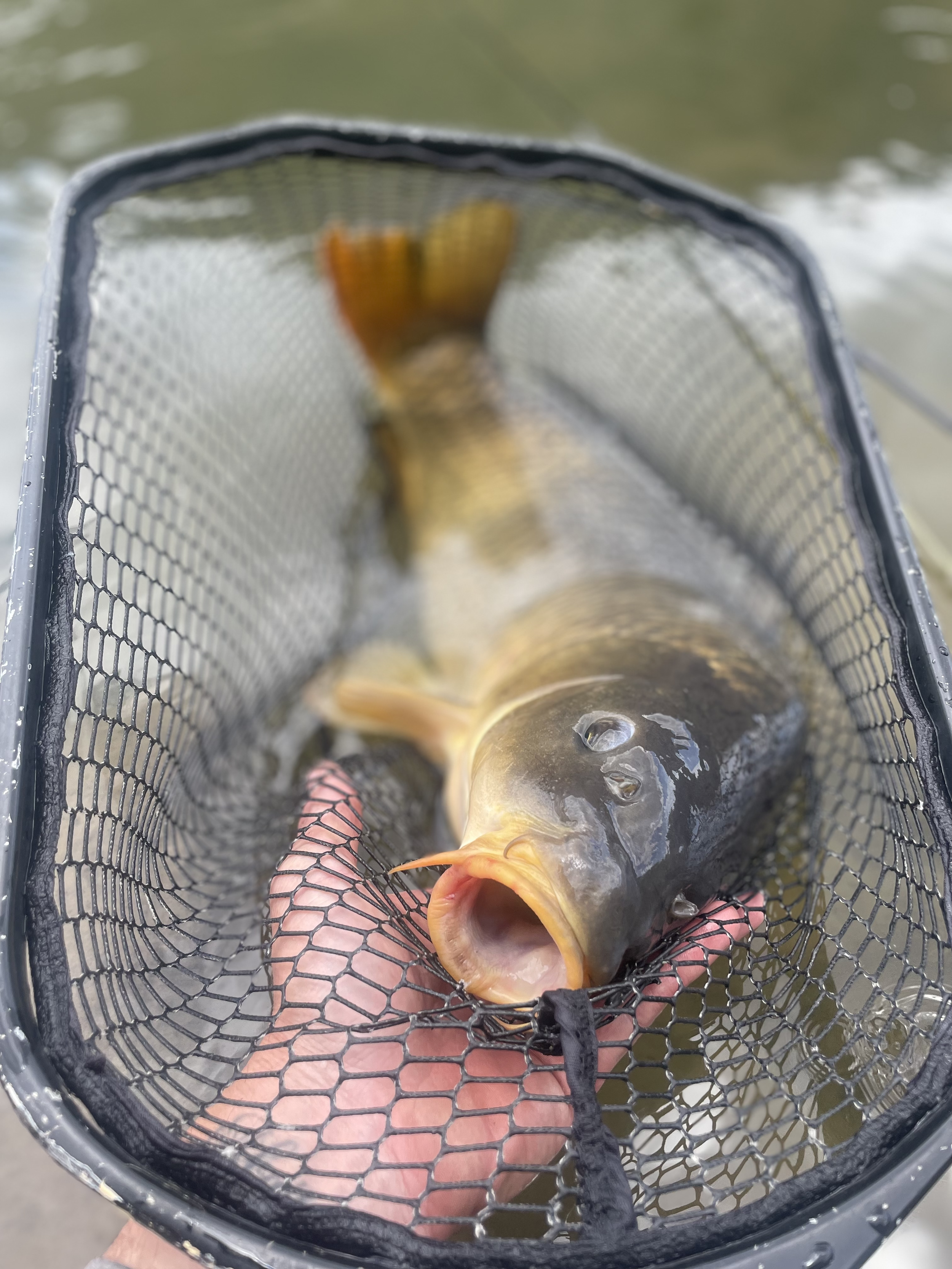
Water temperatures on the Rio Grande are beginning to reach their upper limits for trout fishing. As a general rule, it's best to stop targeting trout when water temperatures reach 66°F. Carry a thermometer and check temperatures throughout the day. If you're planning to fish the Rio Grande, start early and be prepared to wrap things up before the heat of the afternoon sets in. Consider changing targets and pursuing smallmouth bass or carp on the lower stretches of the river.
The Wild Rivers area will continue to offer some productive trout fishing during the morning hours thanks to the many cold-water springs that feed into this section of the Rio Grande. Even so, anglers should be prepared to hike out and give the fish a break during the hottest part of the day.
This is an excellent time of year to head into the mountains and explore some of our smaller streams. The Rio Costilla has been fishing very well through the RCCLA stretch, and with the opening of the Valle Vidal on July 1, anglers will soon have access to one of northern New Mexico's most unique and rewarding fisheries. Small hoppers, caddis, mayflies, and tiny tricos are all producing fish right now.
Fish in the RCCLA section see a fair amount of pressure, so a stealthy approach can make all the difference. Longer leaders, careful presentations, and a drag-free drift will help bring fish to the surface. In the deeper bends, try suspending a small beadhead nymph below your dry fly. Frenchies, pheasant tails, copper johns, perdigons, and caddis larvae are all solid choices. For anglers looking to mix things up, swinging a small beadhead streamer can produce some exciting takes.
The Rio del Pueblo along Highway 518 is another excellent option, offering convenient access and outstanding dry-fly and dry-dropper fishing. The same tactics that work on the Rio Costilla will serve you well here.
Smallmouth bass fishing on the lower Rio Grande remains one of the most enjoyable opportunities of the season. While I prefer targeting them from a raft, anglers fishing from shore can be just as successful. Baitfish imitations and topwater frog patterns can trigger aggressive strikes, and these fish are known for their hard-fighting nature. Focus your efforts around weed beds and structure where bass tend to hold. This is also a great time of year to book an evening float and experience the river as it comes alive during the last hours of daylight.
-
Our fishing report has pretty much been the same for the month of July. Early morning for trout, afternoons for bass and carp. We are finally starting to see some of our monsoons and fingers crossed, will bring some of our creeks up to fishable flows. It has helped keep the temperatures down on the Rio Grande, allowing for early morning fishing to be done. Make sure to carry a thermometer and check those temperatures, and please stop fishing for trout when it crosses that 66-67 degree mark. When fishing the Rio Grande, a dry/dropper is going to be the jam. I like a chubby or a smaller chubby Chernobyl trailed by a a smaller mayfly imitation like a pheasant tail, hares ear, rainbow warrior perdigon or something of that nature. Sticking to the faster riffles is going to key, since the trout will stack up in them since they have more oxygen than the slower stuff. If you’re into throwing streamers or chunking meat, that’s always a great and fun option as well. I like streamers in the 3”-5” range that imitate smaller baitfish patterns like smaller trout or suckers. Change up your colors depending on light and always change your retrieve, going from faster to slower and different variations of pauses.
The Cimarron and Red River continue to fish great in the mornings with some nice hatches taking place. A dry/dropper is going to be the jam, and you typically don’t have to take your dropper too deep. Sticking to just a dry fly can be effective as well. Mayflies, caddis and smaller hoppers are the jam right now and don’t forget about an ant patter, they are very effective this time of year.
Once those temperatures are too warm for trout, it’s time to hit some smallmouth bass, and boy are they exciting. Top water poppers and baitfish streamers are the go to. We are starting to see some nice size bass on the lower end of the Rio Grande. Fishing the weed beds and any structure is going to be the ticket.
-
Our fishing report has pretty much been the same for the month of July. Early morning for trout, afternoons for bass and carp. We are finally starting to see some of our monsoons and fingers crossed, will bring some of our creeks up to fishable flows. It has helped keep the temperatures down on the Rio Grande, allowing for early morning fishing to be done. Make sure to carry a thermometer and check those temperatures, and please stop fishing for trout when it crosses that 66-67 degree mark. When fishing the Rio Grande, a dry/dropper is going to be the jam. I like a chubby or a smaller chubby Chernobyl trailed by a a smaller mayfly imitation like a pheasant tail, hares ear, rainbow warrior perdigon or something of that nature. Sticking to the faster riffles is going to key, since the trout will stack up in them since they have more oxygen than the slower stuff. If you’re into throwing streamers or chunking meat, that’s always a great and fun option as well. I like streamers in the 3”-5” range that imitate smaller baitfish patterns like smaller trout or suckers. Change up your colors depending on light and always change your retrieve, going from faster to slower and different variations of pauses.
The Cimarron and Red River continue to fish great in the mornings with some nice hatches taking place. A dry/dropper is going to be the jam, and you typically don’t have to take your dropper too deep. Sticking to just a dry fly can be effective as well. Mayflies, caddis and smaller hoppers are the jam right now and don’t forget about an ant pattern, they are very effective this time of year.
Once those temperatures are too warm for trout, it’s time to hit some smallmouth bass, and boy are they exciting. Top water poppers and baitfish streamers are the go to. We are starting to see some nice size bass on the lower end of the Rio Grande. Fishing the weed beds and any structure is going to be the ticket.
-
Most of our waterways continue to be low, just like they have been for most of the summer. We’ve gotten a few rains recently, but nothing like what we would typically see during monsoon season. If you’ve got a good rain dance, now is the time to use it because we could definitely use the moisture.
Early mornings in the Rio Grande Gorge continue to be productive, with water temperatures staying below 68 degrees until around 11 or 12, depending on which stretch you’re fishing. We’ve seen some good dry fly activity on certain mornings, with fish keying in on very small mayflies. If you can’t get them to eat your dry, try a small black dropper nymph fished just below the surface.
Once the risers have stopped, I like to fish the fastest water in the runs with either a dry/dropper or a Euro rig. A medium to large Chubby Chernobyl up top with a mixture of dropper nymphs has been the ticket, depending on what the fish are keying in on that day. Most of my nymphs have been perdigons, Hare’s Ears, Pheasant Tails, Waltz and Sexy Waltz nymphs, and anything in that general realm. Lately, and especially for me, less flash has been better, unless I’m throwing a smaller size 18 perdigon.
If you’re into hucking some meat for trout, first light has been great for streamers. Any variety of your typical Kelly Galloup-style streamer has been working well, along with baitfish and crawfish imitations depending on the day. Remember to mix up your pattern size, color, and retrieve speed depending on what the trout are willing to eat that morning. Sometimes a small change in any one of those can make a big difference.
Fishing the lower end of the Rio Grande in the OV, Racecourse, and Bosque sections continues to be great for smallmouth bass. They’ve been eating well both on the surface with poppers and hoppers and below the surface on baitfish and crawfish imitations. There are a lot of overgrown weed beds down there right now, so fishing in and around those has been very productive.
I’ve had several good mornings on the Cimarron River below Eagle Nest Dam. We’ve mainly been fishing a dry/dropper setup with a smaller Chubby or another attractor pattern up top, followed by a Pheasant Tail or Hare’s Ear. They’re still releasing around 30–35 cfs from the lake, so the flows have been awesome. Get there early if you want a good fishing spot, as it has been one of the go-to fisheries around here lately.
Fishing during the week on the Chama River below El Vado Reservoir has been great, mainly stocker bashing with the occasional brown mixed in. The water is stained, so nymphs with hot spots or colored tungsten beads have been the ticket. Flashy nymphs like Sexy Waltz nymphs, egg patterns, Squirmy Worms, Mop Flies, and leeches have also been go-to patterns.
On the weekends, they are still doing their weekend flows for the overnight trips in the wilderness section. Because of that, the water will jump from around 100 cfs to roughly 500 cfs from Friday morning through Sunday morning. Keep that in mind when planning your trip and be aware of the changing flows.
-
We have finally been getting some rain lately, and our nighttime temperatures are slowly starting to drop which has been making for some fantastic mornings on the Rio Grande. Fall is my absolute favorite time to fish the Rio Grande and it’s just about here. Fish have mostly been keying in on emergers and nymphs fished down low, which is pretty typical. Still seeing some risers come up for tricos and hoppers so starting with a dry/dropper rig and then going to an indicator rig with 2 nymphs below is the go to. I like cranefly larva like sexy waltz and regular waltz worms, smaller mayflies like perdigons and quilldigons, pheasant tails and hares ear are the primary go to. Finding the right depth and getting the correct drift seems to be the key over choosing the right fly. There is a lot of food moving in the system for the fish, so make sure to make several good drifts before starting switch things up, give the fish a chance to see your fly out of everything floating downstream. If you’re into hucking some meat, there is no better time to throw streamers than the next 2 months. Anything from your Kelly Galloup style flies in the 3”-8” range to a classic woolly bugger will be your ticket. Switch up your colors and your cadence on your retrieve to find what the fish are wanting at that time. Sometimes they come up high for a streamer, other times you need to get it down to them. Some of my favorite streamer colors are black, olive, tan, yellow, purple/black, and black/red, but don’t hesitate on other colors like chartreuse or any combo of those listed. Don’t sleep on a mono/tight line rig with a heavy jigged streamer as well, especially in the faster pocket water in and around some of the big boulders. Using a size 6-10 with a bigger 4.0, 4.6 or even a 5.5mm bead on it to get the fly down and keep in down there.
The Red River has continued to fish great as well, from the fish hatchery all the way down to the confluence. Dry/dropper rigs and light nymphing rigs have been the ticket. I pretty much fish the same flies on the Red as I do on the Rio Grande.
The Rio Chama below El Vado has also been fishing excellent. Since the water is a little murkier there, I like fishing more junk style flies like leeches, San Juan & squirmy worms, eggs and bigger flashier flies like sexy waltz, Duracell fly, and anything like that. Mostly stocker bashing but there are some quality browns in there, just have to work for them.