
How Ramblin’ Fly Fishing likes to fish the Rio Grande during lower flows.
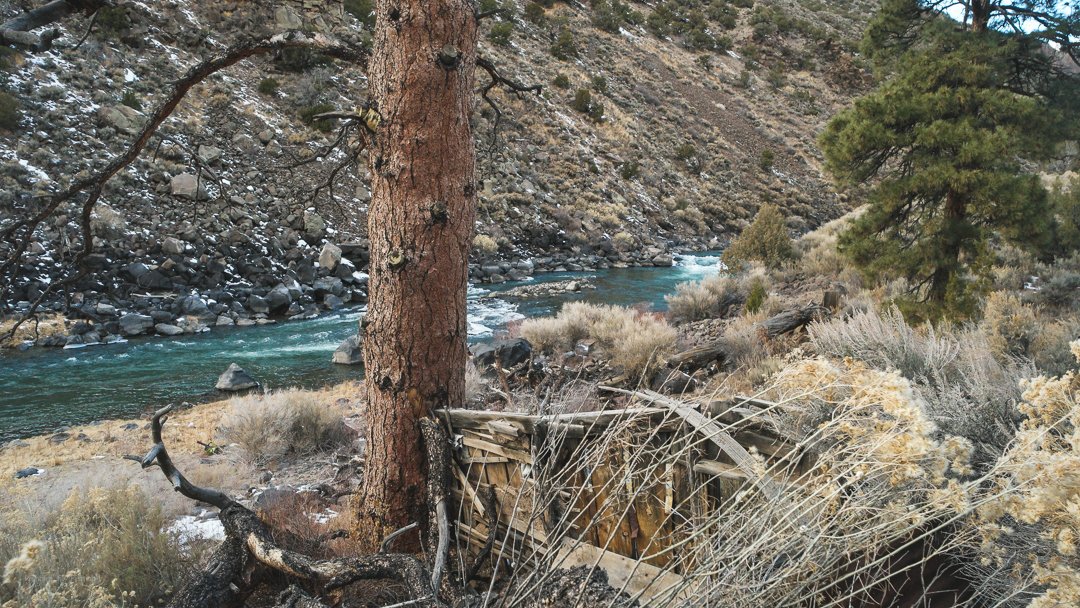
With the winter of ’25–’26 bringing very little snowpack, we’re seeing low water conditions on the Rio Grande. With minimal flow coming across the Colorado border into New Mexico, much of the water in the gorge is currently spring-fed. This helps keep water temperatures down and water quality high, creating some excellent fly fishing opportunities.
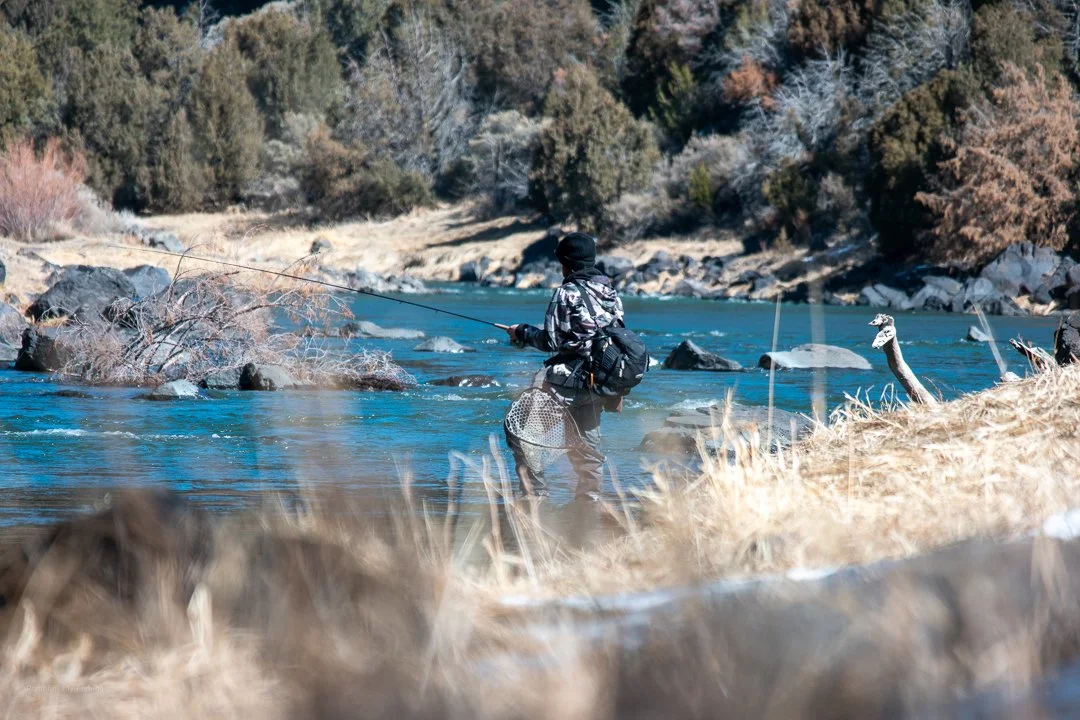
At these levels and temperatures, if you see moving water with foam on the surface, there’s a good chance trout are holding there—whether it’s the fast head of a riffle or a slower, deeper section tucked against basalt boulders. Most fish are looking up, so we like to start with a dry/dropper setup and work the upper part of the water column before going deeper.
When fishing shallower runs, stick with the dry/dropper and adjust your depth and fly selection as needed. Don’t hesitate to lengthen your leader or tippet to improve your presentation. In pocket water and larger plunge pools—generally three feet deep or more—we prefer running an indicator rig with two weighted nymphs. This setup requires dialing in both depth and weight based on how deep and fast the water is moving.
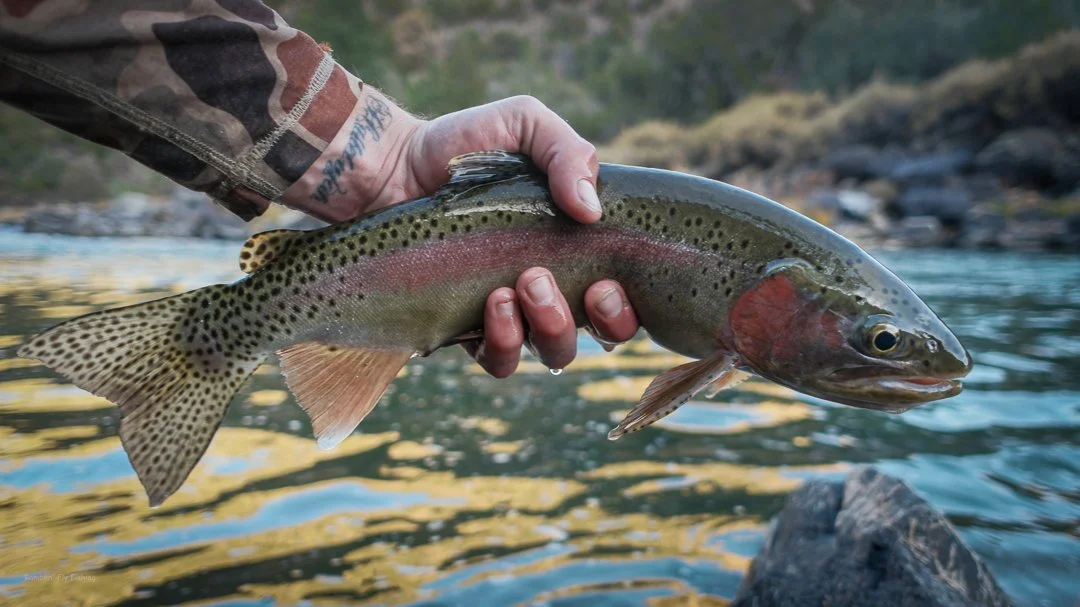
At these water temperatures, trout—especially rainbows—will often hold in surprisingly fast water. Since current slows as you move deeper in the water column, it’s important not to focus solely on surface movement. Instead, consider what’s happening below. Structure adjacent to current creates friction points where water slows down, offering trout a secure holding position with consistent food flow.
If you’ve made several clean, dead drifts through a run—whether you’ve hooked fish or not—don’t hesitate to add some movement to your flies. Trout often key in on vulnerable insects, particularly during emergence. A subtle lift—by lightly stripping line or making an upstream mend—can cause your nymphs to rise in the column and imitate an emerging bug. Some days, this approach can significantly outproduce a standard dead drift.
Above all, stay adaptable. If you’re not getting strikes, make changes. Adjust depth, weight, flies, or presentation. If you’re not changing anything, you’re relying on luck—and that’s rarely a consistent strategy.
Fly Selection:
We don’t focus on any single “magic” fly. Instead, we look at the profile the fly presents in the water and how effectively it’s fished. It’s less about a specific color or pattern—like a particular pheasant tail—and more about achieving the right drift and presentation.
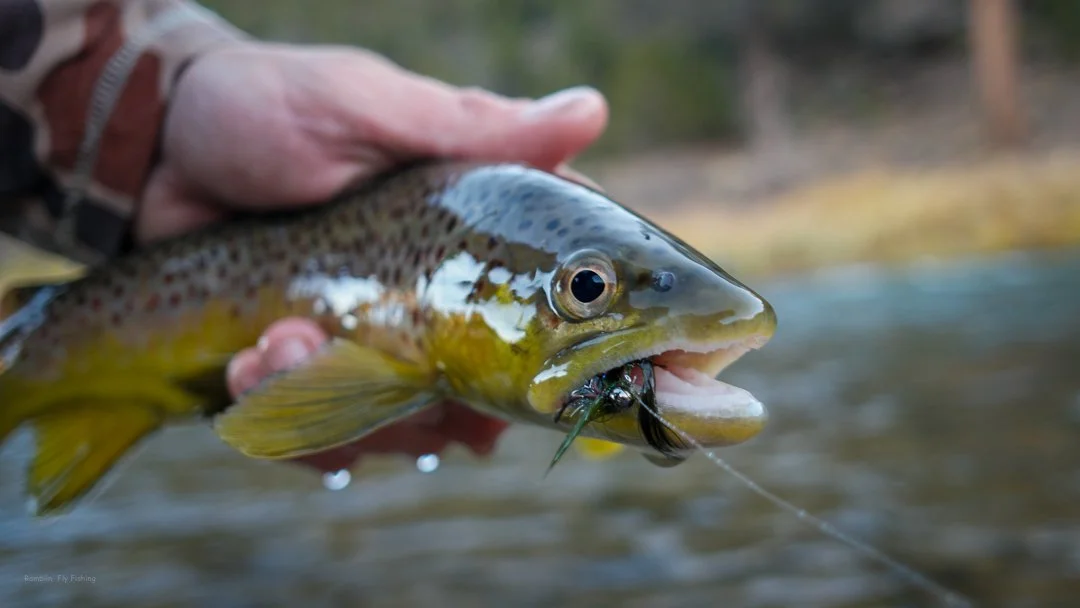
Once you’ve located feeding fish, that’s the time to refine your approach by dialing in size, color, and profile. With current low water conditions, we tend to fish smaller patterns—for the Rio, that usually means sizes 16–20, and then some larger flies, like 10–14, in deeper plunge pools.
Current confidence flies include pheasant tails, rainbow warriors, zebra midges, caddis imitations, sexy waltz, standard waltz (especially during high sun), cranefly larvae, and leeches. Don’t overlook streamers either—we like smaller jigged streamers in these conditions, but will size up and use sink-tip lines when targeting more aggressive fish.